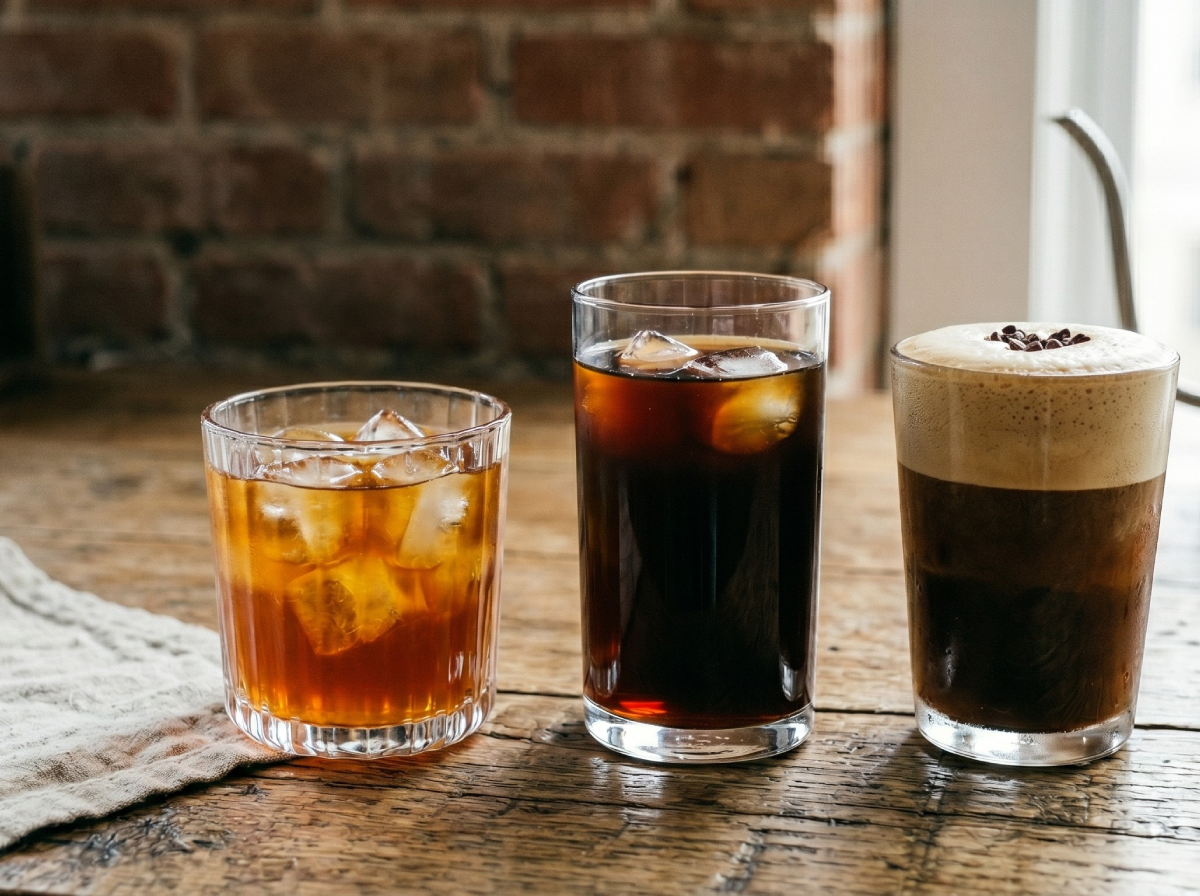
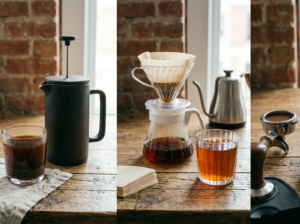
Iced coffee is not one drink. It’s a family of methods that taste totally different because they extract differently and dilute differently.
This guide breaks down three cafe-standard approaches that actually hold up:
- Flash brew: Hot pour-over brewed directly over ice
- Cold brew concentrate: Steeped, then diluted to taste
- Shaken espresso: A bar tool, not a trend
If you want the “why” behind grind size, brew time, and dilution, you’re in the right place. For method-specific step-by-steps on your brewer, start with our Brew Guides.
1. Flash Brew or Japanese Iced Coffee
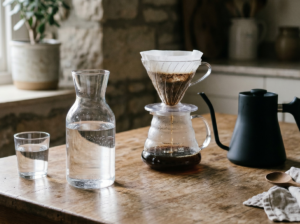
Flash brew is hot coffee brewed directly onto ice. The goal is to capture hot-brew clarity and aroma, but land it cold without tasting watered down.
What you need:
- Pour-over dripper + filters or use your preferred pour-over tool
- Scale
- Kettle
- Ice
- Fresh coffee
The recipe:
Target total beverage: ~500 g iced coffee
- Coffee: 30 g
- Total water: 500 g
- Ice in server: 200 g
- Hot brew water: 300 g at 93–96°C
- Brew time target: 2:45 to 3:30
How to brew:
- Put 200 g ice in your server or carafe.
- Rinse filter, warm the dripper, discard rinse water.
- Add 30 g coffee (medium-fine grind, like standard pour-over).
- Bloom with 60 g hot water for 30–45 seconds.
- Pour the remaining 240 g hot water in steady pulses until you reach 300 g hot water total.
- Let it finish dripping onto the ice. Swirl the server gently to equalize temperature.
Why flash brew?
You are intentionally “pre-building” dilution into the recipe so the coffee chills fast while staying balanced. This is the same logic behind the Golden Cup idea of keeping brewed coffee within a pleasant strength range.
Rock Paper Coffee match
Troubleshooting
- Tastes weak: Reduce ice slightly (ex: 180 g ice, 320 g hot water) or grind a touch finer.
- Tastes bitter or astringent: Grind slightly coarser, shorten brew time, or lower temperature.
- Tastes sour or thin: Grind slightly finer, extend brew time, or increase total hot water contact.
2. Cold Brew Concentrate
Cold brew is steeped in cold or room-temperature water over a long contact time, commonly 12–24 hours.It tends to taste smoother and less sharp than hot-brew-over-ice because the extraction is different.
What you need
- Jar or brewer
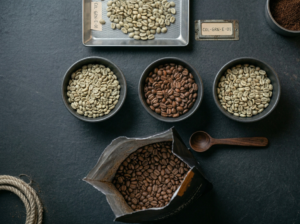
- Coarse ground coffee
- Scale
- Fine filter (paper filter or fine mesh plus paper)
The recipes:
A) Concentrate
Serve: start by diluting 1:1 equal parts concentrate + water or milk, then adjust.
B) Ready-to-drink
Serve: over ice as-is.
Rock Paper Coffee match
Cold brew upgrade: coffee ice cubes
Freeze leftover flash brew or cooled brew into cubes. Your drink stays strong as it melts.
3. Shaken Espresso, Shakerato-Style
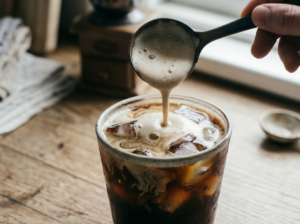
If you’ve ever had an iced espresso drink that tastes unusually smooth with a tight foam cap, it was probably shaken.
Shaking creates rapid chilling and a stable foam, but it only works when the espresso is dialed in and the ice ratio is intentional, not random.
The bar-standard build:
For one drink
- Pull: 1 double espresso
- starting point: 18 g in, 36 g out, about 25–35 seconds (adjust to taste)
- Add to shaker:
- 120 g ice
- 10–15 g simple syrup (optional but classic)
- Shake hard: 10–15 seconds
- Strain into a chilled glass
Rock Paper Coffee match
Troubleshooting
- Foam collapses instantly: Espresso is under-extracted or too cool, shake harder, or use fresh ice.
- Tastes harsh: Dial espresso finer or shorten yield, or reduce shaking time slightly.
- Too sweet: Cut syrup in half and add a pinch of salt only if needed (do not mask bad espresso).
Picking the Right Method
- Choose flash brew if you want clarity, aroma, and the character of a hot pour-over, but cold.
- Choose cold brew if you want smoothness, batch convenience, and a softer profile.
- Choose shaken espresso if you want cafe texture and a high-impact drink built in minutes.
If you want step-by-step instructions for specific brewers, go to Brew Guides.